Friday, 25 December 2009

Credit Crunch Christmas


Thankfully, even with the failure of the Eurostar to get me to Paris for the New Year, and the fact that the snow has melted around Bath, the feeling of Christmas still remains; Ben, Dad and I went to Mass this morning (I told you I was a good Catholic boy!) as a unit, a lovely thing to do amongst families. Having said that, Ben, the elder, managed to wake us up like a child hungry for presents at seven this morning, so we were feeling a bit jaded and looked forward to our return, and to an enclosed environment where we could, if needs be, just crash on the sofa for a few minutes. However, we got back for very strong coffee and a mince pie and prepare everything for a late lunch, followed by the unwrapping of appropriately useful, silly or fun gifts. There is comfort in familiarity and doing Christmas is one of those things. Some people’s habits don’t really change, even after several years.

So with that in mind, our food choice on this occasion was a bit different to the norm, with no capon; the usual choice. Smoked salmon, roast duck (a rather large one from the local butcher) with all the trimmings, and Christmas pudding, ordered and delivered by Fortnum & Mason (who else?). In other words, a bit of a mixed bag.

The wine choice came from what we had in Dad’s ‘cellar’ (read larder). We started with Jacquart (which I have blogged about before). I know. Before you say anything, a good Chablis with a bit of oak would have worked a treat, but, as the title implies this is a Credit Crunch Christmas and I picked this out from a left over wine tasting.

The duck was a bit of an experiment, a Marsannay from the Cote d’Or, a Pinot Noir based wine with the most delicious berry lightness and low tannins that went ok with the meat (in other words, it didn’t steal the bird’s thunder) and particularly unusual as it is almost a deep rose in colour rather than the light purple-ish red that maybe a Gamay or other light red would have.

Finally, a Tokaji Azsu to go with the pudding. A dried berry and citrus zest wonder from the East of Europe (yes, I know it is Hungary. I went to Budapest to get it myself!) with a rich and ever so slightly cloying after taste that left me feeling I wanted to whoop with joy, before mellowing on a bed of Hungarian down pillows to slowly doze and leave the washing up to those left behind (i.e. Ben and his early bird Santa imitation). Good stuff and worth the wait of four years to find an appropriate moment.

All in all, a rich and heady combination which is sending me to a rapid dreamlike state, and ushering me to an early bed.

So not the normal blog, but a quick note to say, good night and I hope you have a very Merry Christmas.

Lou

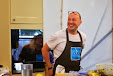
Ps Thanks to Jamie Keddie for this photo knicked from his blog..!

Thursday, 17 December 2009

Angels and Demons


Following up from the recent tasting of Beaujolais Nouveau (surprisingly good if not slightly expensive) I travelled with Dad (not actually moving from the spindle back chairs in the basement, but that is wine tasting for you) down from Beaujolais to the Rhône valley and to Vacqueyras, giving us the chance to chat and mull over the wine in front of us.

So to set the scene: My big brother Ben has returned to London to work on the Chancellor’s report, the street lights are glowing with that wonderful orangey hue as the wintery, misty night rolls in, and the fire is burning with renewed energy in the hearth. Crackle! Snap! (Are you with me?) The cold I have just recovered from has really thrown me, so I am not convinced my palate will serve me well with this one, however, I will press on with Dad as my back up.

Nestling by the Dentelles de Montmereil and sheltered by Cypress trees from what must be the Mistral winds, is a wine made with a blend of Grenache, Syrah and Mourvèdre (though I didn’t notice any reference to the latter on the label); Les Grands Cyprès, Vacqueyras 2007 (Waitrose, £7.99 from £11.99) 14%. Vacqueyras is a Rhône Valley region lying just south of the Gigondas (so this vineyard must be right on the northern border but on the other side of the teeth) a mere 20 kilometres or so from Orange in the South of France.

This light ruby red wine has an almost devilish scarlet tinge rather than a rich bluey red of some other Rhône wines. The clear rim sparkles and winks in the glass from the light and contrasts with the slightly coloured legs.

Swirling this wine around (in that knowing way that experts do when talking to people, but somehow I just manage to spill some and end up having to take items of clothes off for washing) I get a rich Morello cherry hit on the nose followed by cassis; brambley blue fruit richness and hints of sharper citrus. Lighter berry fruits follow, coming to the nose; ripe strawberry, some cream and also a more mellow tone, musty and dull, a papaya-like mustiness, slightly sour yet fruity; a bit of a serpent in Paradise (given my dislike of papaya).

Changing my glass (I told you I swill so badly, this one has been knocked over. Thanks Dad) I get sour cherry, lemony flintiness and hints of stalk. The elements of cream and the cherry remind me of something similar to clafoutis; more sour cherry and less of a creamy vanilla batter scent though.

Each pause lets this creamy richness develop. I wasn’t sure about this purchase being always dubious about discounted or promoted wine, but realise my glass, hand, and bottle are probably a little too cold for this one. So giving the wine a bit more air and warmth, Dad and I take our first sips.

Initial berry and cream lead to fruity, woody stalk and sharp acidity that the Grenache provides. This high acidity leading to a mouth puckering, mouth wateringly long finish. There is a subtle melange (now there’s a word I haven’t used in ages) of the sourness and younger red fruits, red currents, strawberries, raspberries. Also, a impish hint of Parma violet, the element that gives the mellowness, bridging the sour cherry, the dark berry and the smoky tannic prickle. A subtle hint of herb comes next, though rather a bitter liquorice herb; stalky, chewed pencil ends. Finally flinty rocks blend with the acidity and tannins to gently coat the mouth.

Resting further and gaining a better room temperature, out come the richer fruitier berries that I had on the nose initially. Some leathery stewed fruits appear, which may or may not be the mysterious Mourvèdre that fails to appear on the label (apologies to Waitrose if it is, I am getting glasses soon). But predominantly it is the rich, creamy, dark and naturally sweet berries that remain in the mouth and in the mind. This, added with mild and smooth tannic elements, and the warming peppery prickle that comes from the Syrah grape, tickles the tongue and the tannins, spice and pepper pull together to provide the long and delightful finish.

Dad and I sit back and watch the dancing fire and breathe the cedar aromas emanate from the hearth; smooth music plays in the background, and we sip the wine that enlivens our palates with its own crackle of spice and pepper. Angelic fruity richness and devilish peppers. Spice. Acidity. Length. Temptation! Naughty but nice (as the old “cream cake” adverts used to say).

Friday, 27 November 2009

Prime beef from du Boeuf?


Ok, let’s be honest. I didn’t think that Beaujolais Nouveau (Georges Du Boeuf 2009, Waitrose £5.99, 12.5%) would bring back some fond memories or a wry smile to my face, as I foist it onto my brother and Dad for the latest wine tasting. It isn’t really a bad wine, it is just not meant to be a classic wine, merely a quaffable, lightweight, trouble free wine (we can leave the ‘trouble’ to the chefs on the other side of the room).

I remember the very first time I tasted Beaujolais Nouveau. It was 1985, and I was five years away from legal drinking (you work it out). It was magical. The world of wine had not yet opened up to me, but a visit to London, trips to the Hamley’s, Madame Tussaud’s, the Tower and the Grande Dame of hotels, the Savoy, for a party to celebrate Beaujolais Nouveau Day, made me feel special and grown up, as if my birthday and Christmas had come early. It was the first time Dad allowed me a glass to myself, and the last time we went out together as a family.

Now, I realise there may be a raised eye-brow or two using the word ‘magical’, though 1985 was a reasonably good year for Beaujolais Nouveau; but, there is something extraordinary about harvesting and producing wines with such a quick turnaround, sometimes under six weeks.

Back in Bath, the present, the kitchen, while Dad and Ben between them heatedly fuss over the supper (it is only a chicken!), my glass is sitting waiting for my attention. The eyes are immediately drawn to the wonderful and pure beetroot juice colouring of this wine; a rich, staining purple-red which leaves a crown of coloured legs when it is swilled around the glass, and a distinctive clear rim when settled.

Bringing the glass up to the nose, the first surprise comes from a rounded, rich cassis aroma. Why a surprise? Normally, there is a lighter cherry note that comes from the Gamay grape, which is what this wine is made from. Here, initially, perfumes of darker fruits come to the fore. This cloudy cassis gives way to some hints of fresh strawberry and then old familiar characteristic smells of Beaujolais Nouveau start to come through: those perfumed, lighter red fruits.

Beaujolais is famed for its unique fermentation process that boosts the flavours; carbonic maceration or whole grape fermentation. First discovered by Louis Pasteur (yes, the milk man), the whole grapes are put in a sealed vat where carbon dioxide is pumped in to start the fermentation process before pressing. This process enhances the aromas and flavours giving it a jammy, sweeter element to the tasting process, taking your senses on a journey from cherry and berry to banana, jams, bubblegum, pear drops and kirsch. The flavours are all in there in various bottles (and, OK, I admit it. I even had a sniff from the top of this bottle to double check my nose was working!)

The second surprise is on the palate. Creaminess hits the tongue in the first instance, bringing with it cassis and darker berry notes. Taking another sip, it is followed by a powdery, cloudy mouth filling strawberry. Contrasting to the fruity flavours are some stalkier, flintier elements, reminding just how young and green the wine is. The flintiness comes from the granitic and schist based soil on which these grapes are grown. Giving it a rather pencil lead note to the palate, rather than for example, a clay soil which hints at more leathery, leafy tones. Either way, it emphasises the acidity for which the wine is well known and its lack of serious tannins.

Coming back to the glass after resting for an instant; there are some sour cherries emphasising the high acidity, drawing in the cheeks and making the mouth water. The sweet fruits are brought further forward as the glass reaches room temperature. Again, summer fruits, ‘cherry lips’ sweets (does anyone remember those?), and jam, meet berry and sharpness. Throw in a chalky, powder puff of perfume that seem to fill the mouth and you have this year’s blend; hailed as being the best primeur in fifty years.

Georges du Boeuf is a master of turning the commercial into something a little bit more exceptional, the ordinary into something a bit more extraordinary. Beaujolais Nouveau Day is said to be down to him. So, this year’s results are surprisingly enjoyable, but let’s not get too excited. We are not talking a well rounded Margaux here, or a rich and mellow Chateau Neuf du Pape. Good value? I would say yes, but with a BUT. £6 is nowadays not a lot to spend on a bottle of wine, in fact, wine at that price is cheap (and I am always looking for bargains in these days of thrift).

My point is that you have to take Beaujolais Nouveau in context. As I said at the beginning, it is a quaffing wine, not a quality wine, so this year you are getting something that is better than average for a reasonable price; it just isn’t a bargain. But, drink it with, for instance, a succulent roast chicken (like the one that is waiting for me the other side of the kitchen, if the boys stop fighting), or the Thanksgiving turkey (which comes a week later than Beaujolais Nouveau Day), and the acidity will bring out the sweetness of the flesh. The fruit will contrast well with the salted skin, the creaminess and the butter. Then, maybe, you are talking about money well spent.

Tuesday, 22 September 2009

American Beauty


Is it me or is there a distinct chill as the days draw to a close? There is a distinct change of smells, with leaves changing colours, and gusts bringing mini-whirlwinds of russets and gold. Autumn is definitely in the air and getting out warming gilets and scarves come to mind.

And so, with the exception of Dad’s gardener, visiting early this morning (very early), and Ben’s call to say that having partied hard he is now trying to remember when his wallet, amongst other things, was pinched, I managed to make the most of the solitude and the seasonal mood, choosing to cook a hearty supper and to pick some of the last apples from the tree for a pudding.

My take on a seasonal meal is Mutton with flageolet (an Elizabeth David recipe that I have altered to suit myself). The gamey richness of the meat and the muted colour of the beans, lifted slightly by the tomato, create the tone. A light Tarte Tatin to follow, and to go with this? A definite bargain from Waitrose: Hess Syrah 2005, Methode Traditionelle, Monterey County, USA (from £9.99 to £6.49), 14.5% (yes 14.5%! Remember, this is Schwarzenegger country!) I should really have considered Steak au Poivre to complement this punchy wine. However, I had mutton on my mind.

The Hess Collection has several hectares of vineyards (as well as art galleries) in California, mainly in Mendoza. But, sandwiched between other heady names such as Kendall Jackson and the more stellar Robert Mondavi, Donald Hess grows this Syrah in Monterey County. The longer growing time (sometimes a whole month longer than the average grape) and careful irrigation, due to the low average rainfall, influence the slow maturation of the grapes. On top of that, the variety of soils, a mix of loam, clay and sand (in layman’s terms: the baking clay can act as a thermostat, whilst the sand and loam the drainage), help create an excellent microclimate in which to produce this heady wine. Not forgetting that 1985, was considered a particularly good year for Monterey.

So, having said all that; I can return to the bottle and pour the wine into the waiting glass. And what richness of colour! What a bluey-red. What a plumy-ruby-red red. Coloured legs, which hint at the strength of the wine run down the glass. Joyous ‘Lacrima’ (Oh you can’t take the catholic out of the boy!).

On the nose this wine is rich. Rich, rich, RICH! Dark fruits and liquorice hit the senses, the strength of these aromas making the pupils dilate (I told you this was strong!) Spices of anise mixed with the sweetness of the raisins lead to thoughts of the exotic. Woods, especially a cedar-like sweetness, pencil and pencil lead reach out from behind the strong vanilla and cream (this caused in part by the French oak that this wine is aged in).

I am already heady, in part because of putting my nose into the glass enough times to give me a high, but also because this wine is just a pure temptation. As my tongue plays with the liquid fruit, I am seemingly rolling in dark fruit, any dark berry: mulberry, loganberry, that sort of thing. A velvety wrap, a rich compote of dark fruits made more intense by honey, vanilla and cream (think American Beauty, but with me and grapes! Better not, thinking about it, I need to go to the gym). Woodiness and tannins find their way through the smoothness, making the teeth dry and a high acidity leaves the mouth watering intensely. And then it comes: BAM! The syrah punch. Rich pepper, peppery-pepper, peppery spice, almost chilli pepper (did I mention the pepper?), and a really long ticklingly prickly finish on the tongue.

Letting the glass air a bit more, and in the spirit of California, I need to SHARE. Normally, I am not a great fan of many New World Wines. There, I have said it! I feel better now. To me, they are often too big in fruit and too heavy with alcohol; ‘confectionary wine’, sweet and filling, leaving room for little else. Quality is potentially sacrificed for commercial advantage and big flavours; the bigger the better (South Eastern Australian wines being particularly guilty in my mind, with their addition of flavoured staves or essences to increase the oak and smoke flavours).

With the Hess Collection (and many boutique producers), this is not the case; care and traditional methods of wine making mean that they are serious producers offering pleasurable, not ‘party’ wines. And this wine, even though at the cheaper end of their collection, whilst strong, is nevertheless delicious. I am exhausted by that sharing; that openness. Have another drink Lou!

Taking another mouthful; the creamier elements come to the fore with hints of apple (almost dried). A sharper citric tone rather like red apple or raspberry
(but sweeter than cassis which has a sharp acid lemony note to it) makes the mouth water; a top-note flavour that rises out of the deeper darker fruits (think of that top C in Allegri’s Miserere). Some powder on the tongue adds to the rich velvetiness, and the wood and liquorice, give added layers to this jammy wine. It is like having a pudding it is so rich (but I already have my Tarte Tatin in the Aga).

Carefree swinging to the oven to get my pudding, and even more carefree swaying back to the computer (helped by the mellow and soothing voice of Sarah Vaughn on the CD player) I feel as if I have been massaged, wrapped in a duvet and kissed goodnight. I can now slump in an armchair to slumber and digest. For a low end of the range, boutique (and not forgetting New World) wine, I am truly delighted. But for value, I got a real bargain and am gigglingly happy. Goodnight.

Tuesday, 15 September 2009

Death, the 80's and me


Slightly aside from my normal wine tasting tales, I have been away in Paris, so, I have been too distracted to do my usual tasting blog.

Instead I have been 'checking out' some unruly tenants, sympathising with my concierge (I have learnt a lot from Muriel Barbary) and generally trying to find IKEA from the Paris Circular, or Périphérique as it is known, painting, dusting, cleaning, scrubbing, checking in new tenants and finally, returning to the calm and tranquillity of Bath.

The family home makes me feel melancholy, with echoes of footsteps on the hall floor and only a buzz of traffic and people; maybe it is because of returning to Paris, which brings back memories of Dominique and our lost promises; maybe because it is still haunted by laughter and voices of yesteryear when we were a whole family and life was seen through the youthful tints of rose and sepia; maybe it is because I miss my father, who has extended his travels in the Southern Hemisphere for another couple of months (I like his style, but I would like a retirement fund like his much more); or, maybe it is just the weather and the news that Patrick Swayze and Keith Floyd have died.

Now don’t get me wrong, I am not, nor ever was a Patrick Swayze fan. No! He sparked up quite a few jealous flares when I was dating the girlfriends of the time. Constant chatter on double dates (take it from me, double dating is a bad move) of how ‘gorgeous’ he was, whilst we, the boys would sit and grumble in the corner of the bar listening to the trills, the ‘oohs’ and ‘aahs’ and wondering when we would get a ‘look in’ (I think that was when I made the decision to take my dates to scarier films so that I could get the girl in my arms at the crucial moments). I was too young, thankfully, for Dirty Dancing but not for Ghost, so never had to consider my dance moves, only my artistic side.

However, I was a Keith Floyd fan. I loved the way he cooked, chaos with a flare, going from failure to failure with enthusiasm, to paraphrase Churchill. I loved the fact that he was a Somerset boy like myself, which in my youth was a factor more so than today. Presentation was not as important as the sensations that came from flavours, something I am mostly in agreement with now, though debates on 'feasts for the eyes' can run and run.

His love of all things French was a healthy part of my decision to go to France to learn about food and wine, as he did, and with that, life and love. I ended up in Paris rather than the south, firstly poor and hungry, but later, with plenty of friends and eventually the love of my life. Story book stuff really, and it is partially thanks to him.

Inspired to learn, my first wine lesson was over a ropey Beaujolais, light in colour with cherries and a chewing gum flavour that I later learnt came from the carbonic maceration for which Beaujolais is famous. From there I progressed to other grape varieties, and then other wine producing countries. I did a wine course before working in a Parisian café bar (serving beer and more ropey wine, notably Morgan, and learning very quickly and from scratch how to cook as the owner demanded more from me).

It was through his inspiration that I read Elizabeth David, then Jane Grigson and the wider food writing community (I should say Julia Child given the film of the moment but I haven’t seen it and do not own her books), getting inspired by them too. Setting higher, and more chaotic standards for myself (I still love the chicken with leeks and cream recipe), and once, though thankfully only once, setting the kitchen of the café on fire.

It is thanks to Floyd that I understood why there is genuine and real pleasure to be found in food and wine, and I honestly felt that I was following in his footsteps (not forgetting his liking for The Stranglers, his theme tune). Sadly, seeing it all crumble around him, the drink, the illness, the bankruptcies, all that too is a lesson learnt. But it is not the latter that we should remember him by but the fact that he was a gourmand, a gourmet, a bon viveur. Full of fun, energy and passion about what he did.

So raise a glass to his memory as I will, and to Swayze (despite the arguments he caused), and to the fun times, the bad hair and turned up jacket sleeves; of the period that is becoming, more and more, just another decade in history.

Monday, 3 August 2009

Sunshine in a glass...


I have decided to go for a short visit to London (en route to the Paris to deal with some rather unruly tenants). Dad’s house in Bath was becoming too big and airy without his being there, being on a ‘Who do you think you are?’ ancestry finding mission in Australia, and I needed some company. So, by way of a 'thank you’ to my older brother, Ben, in who’s rented accommodation south of the river I am staying, I have taken the spare keys and gone out to the shops, producing pasta, varied ingredients, and of course a bottle of wine; Italian, naturally, to go with the pasta.

Oddbins pointed me in the direction of a light white Soave (Azienda Agricola Strele, Costeggiola, Soave DOC 2008 (12.5%) £11), which seemed temptingly Summery, and fresh enough to raise the mood on a barely sunny day. As a wine, Soave was once barely considered worth discussing seriously not too long ago. They specialised in big output and low quality, expanding and expanding further the DOC area to meet demand, diluting the Garganega with Trebbiano di Soave and sometimes Chardonnay making the DOC regulations, frankly, a bit of a joke.

In recent years, however, smaller producers have been trying to rein in the branding boom and provide wines worthy of Soave’s history. The Strele Estate is one of these. Its 9 hectare pocket lies in the hills overlooking Soave, north of the Adige River and east of the famous city of Verona, producing a Soave DOC wine with 100% Garganega grapes. The name Soave means suave, or smooth, so opening the bottle and preparing for supper, I am keen to see if there is any truth in this name.

Looking at the colour in the glass (in a room where there are no white walls) it is a rich, golden yellow, a Summer sun colour to banish clouds; a comforting golden glow. Mellowing even! Yes! A real mellow yellow (there is a song about that).

Dipping my nose into the glass, there are wonderful rich lemon and pith. But interestingly, more pith than lemon. Ultimately this has that refreshing aroma that brings nostalgic, sepia tinted memories of Grannie's farm in Somerset; hot sunny days, cattle grazing and, after some rounding up at feeding time, the reward of that home made pithy puckering lemonade. Behind this lies the secret of the quality and, therefore, cost. Hints of white fruit come forth, but then these fade and give way to stronger aromas of tropical fruits: melon and mango; papaya, pineapple and pears. (I have to pause and look for another room. Cooking, candles and other fragrances coming from the flat are putting me off). I will tell you what image is going through my mind that will help me clear up the combined aroma sensation coming from this glass. Imagine ice-cream, emphasis on the cream not the vanilla, topped with dried apricots and drizzled with honey (... pistachios for decoration. Ok, I am gilding the lily. Forget the pistachios). THAT is what I am getting from the glass in the initial few minutes. Warming up a little, the sweeter fragrances mellow and behind them lie the herbaceous and young green elements that a younger wine gives; basil and fresh peas.

On the palate? Again, mellow, mellow, mellow yellow on the lips. Lemon and pith, pith and lemon. The flintiness comes through when it is chilled. A long, strong acidity finish making the mouth water (even more than when I was just sniffing it. Or is it the thought of that apricot ice-cream desert that I now want to make?). The coldness also gives a light prickle to the tongue, pushing you on to move beyond that prickle and its associated mineral flint, emphasising the calcareous soil that the Garganega is grown on.

Letting it settle for a bit, the prickle goes and allows the true flavours come to the fore; and, in bringing it to the temperature of the room, out come the smoother, richer and more exotic fruits, honeyed off by an almondy smoothness, that balances the acidity and keeps you wanting more.

What impresses me is that it is a 2008. In other words, this is a young wine, and even now it offers great flavour and develops nicely in the glass. Worth the money? I think so, though I am not so sure Ben, the accountant, will see it my way. Best keep it to myself.

Sunday, 5 July 2009

Liberation...


In this infernally hot weather, making deliberate reference to Dante’s circles of Hell, isn’t it nice to have a bit of space from everything? What the Americans would call ‘me’ space. I am having a very liberating evening to myself. My brother, Ben, is going to his first liberating ‘event’ in London with a friend, and Dad had gone to Australia for four weeks to see other members of the extended family. (The name Woodbine comes from our nineteenth century prisoner ancestors who acquired the name when they either became liberated, and did not want to be associated with their misdeeds, or because they did not want to be caught after ‘liberating’ themselves). You get the theme so far.

At last, alone in the house in Bath; keeping cool with all the windows of the building open at the back, overlooking our small terrace and herb garden. Jazz music playing ever so slightly too loud whilst preparing supper – a basement kitchen helps muffle noises for the neighbours, or at least that is what I am convincing myself as I really can’t face their complaints in what I am currently wearing. Yes, keeping cool wearing just my boxers, an apron, and a glass of something I found in the fridge to hand. Quite the naked chef. All being a picture that reflects the heat and need for space.

So this is it. Salad chopped, vinaigrette prepared, and salmon oiled and in a skillet waiting to go (my top tip is that I like to cook my fish and shellfish in bacon fat. But I digress). I pour out the Terra Viva, Bianche Terre di Chieti, organic 2007, white wine that my Dad had obviously bought from Waitrose for a carefree evening. The grapes being classified as typical of the geographic region, Abruzzo, with its humid landscape and sometimes excessive heat; in other words, Trebbiano d’Abruzzo table wine (Science bit: Trebbiano d’Abruzzo is a subvarietal of the standard Trebbiano. It is known in France as Ugni Blanc, used predominantly in brandy making, especially in Armagnac. Well, that is comforting).

Pale yellow with hints of green, the smells emanating from the glass (over the smell of cooking) are citrus. Grapefruit and lemon pith with an almost ‘sweet’ element to it. The label states that there are aromas of peach and melon and this could explain the ‘sweetness’ that I am getting, but it is very subtle and a little more floral than that.

On the palate this wine has a fairly obvious citrus bite, but behind lies the link to convince me that this will go well with my food. Elements of basil and liquorice herbs are drawn out as the flavours linger in the mouth. And, yes, as the label suggests, the sweet fruits are there; subtle but evident. High acidity versus a slightly unctuous almond cream; a flinty minerality added to the lemon finish. This is a definite Martini lemon rind moment with that almost nutty oily element (normally coming from the gin in a Martini, but bear with me, I am on a roll) contrasting against the sharp flinty citrus notes. That same mineral note also complimenting the herbal liquorice basil link, which I mentioned before.

The contrasts in the glass reflect the contrasting and dischorded jazz tunes coming from the CD player; acidity against unctuousness; lemon against almond cream; modern music against the Georgian surroundings. I dismissed this as a humble table wine, but I have to be honest, the mood, the food, both are being lifted by this enjoyable quaffing wine.